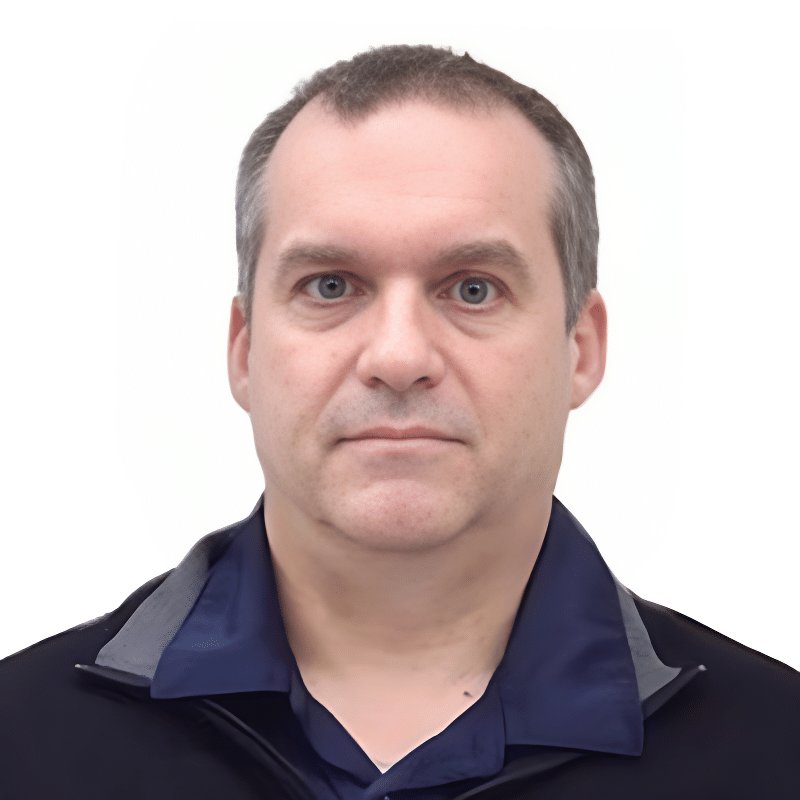

Principal Implementation Consultant
Contruent
United States
Chris Kunneke is a Principal Implementation Consultant at Contruent, bringing over 20 years of experience in cost management across government, utilities, petrochemical, and private sectors, both nationally and internationally. He has extensive capabilities in cost management, estimating, project controls, planning, and scheduling, with strong financial management expertise in the Engineering, Procurement & Construction Management sectors.
Chris possesses unique technical skills including expert understanding of finance and accounting system integrations with Contruent (PRISMG2) and other platforms such as SAP, Oracle, and PeopleSoft. His strong database development skills in SQL and Oracle allow him to develop custom reports and dashboards directly for clients.
As the author of the PRISMG2 Cost to Complete (CTC) model, Chris has enhanced core Performance Measurement tools with sophisticated forecasting capabilities. He has successfully implemented Contruent (PRISMG2) on some of the largest power projects in the world today, including generation and nuclear decommissioning projects in South Africa and the United Kingdom.
To connect with Chris, please check his LinkedIn profile.
When companies implement project controls or project control systems, they typically focus on mega and large projects—those over $50 million. But here’s what often gets overlooked: not all companies execute mega projects, yet the sum of all their small and medium projects (under $50 million) can easily equal or exceed one large or mega project in total value.
The challenge? Mega and large projects typically have dedicated project offices staffed with project managers, construction managers, planners, schedulers, cost controllers, and contract management teams. Small projects don’t have budgets to support dedicated offices, so one team must execute multiple small projects simultaneously to remain cost-effective. This leads to understaffed project offices and a shift from true project management to basic project reporting.
According to PMI, a project is a temporary endeavor undertaken to create a unique product, service, or result with a defined beginning, end, specific goals, and constraints like budget, time, and resources. A project must always be controlled based on standard processes and procedures—irrespective of size.
The reality on small projects is that budgets are managed at the project level while forecasting and progress are tracked at more granular levels. Most software systems require users to capture all data at the same level of detail, creating unnecessary work just to maintain the system. This is why many small projects end up managed in Excel, with results transferred to ERP systems for reporting. Another issue is that most project management systems require creating separate projects on a one-to-one basis, forcing users to open 35-50 projects individually—consuming more time than actually capturing data on changes, commitments, actuals, progress, and forecasts.
What if there’s a better way? What if you could treat a group of small projects as one program, where each project equals one cost code? Imagine managing budgets and changes at the project level, capturing actuals and commitments at purchase order and contract level, tracking progress at scope item level, forecasting at any required detail level, running full earned value management at the project level, and comparing project forecasts against annual financial budgets. While ERP systems allow some of this functionality, critical functions like progressing, detailed forecasting, and loading potential and pending changes aren’t available—hence the reliance on Excel.
This session explores how to move beyond spreadsheets and implement robust project controls for small projects without creating excessive overhead. You’ll discover practical strategies for structuring efficient small project offices, applying consistent control processes, and leveraging technology that works the way you actually manage projects—not the other way around.
Here’s what you’ll gain by attending this session:
Presentation Category: Project/Program Management
Competency Level: Intermediate